

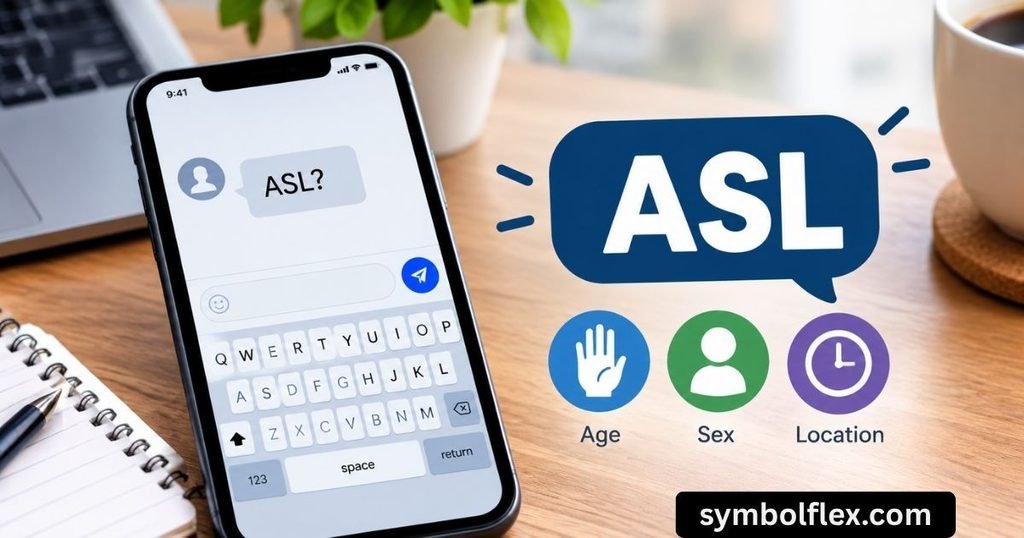
“ASL” usually means one of three things: “age, sex, location” (an old chatroom question), “as hell” (modern Gen Z slang for emphasis), or “American Sign Language.”
The correct meaning depends entirely on the platform, the capitalization, and the context around it.
If you’ve seen “asl” pop up in a text, TikTok comment, or DM and had no idea what it meant, you’re not alone.
The ASL meaning has shifted a lot over the past two decades, and it now carries very different weight depending on who’s using it.
Quick Answer
“ASL” is a flexible abbreviation. In older internet culture, it meant “age, sex, location,” a question strangers asked in chatrooms.
Today, most younger users write “asl” in lowercase to mean “as hell,” as in “that’s funny asl.” Capitalized “ASL” can also refer to American Sign Language in educational or accessibility contexts.
What Does ASL Mean?
The ASL meaning you’re looking at depends on three separate uses that have existed side by side for years. Each one has its own history and its own audience.
ASL as “Age, Sex, Location”
This is the original internet meaning, born in early 2000s chatrooms like AIM and Yahoo Messenger.
Someone would type “ASL?” to quickly learn who they were talking to. It’s still used today, mostly by older millennials or in anonymous chat spaces like Omegle.
ASL as “As Hell” (Gen Z Slang)
This is the version dominating texts and comments right now. Gen Z uses lowercase “asl” as an intensifier, similar to saying “so” or “really.” For example: “this song slaps asl” means the song is really good.
ASL as “American Sign Language”
In classrooms, accessibility content, or disability advocacy posts, “ASL” refers to American Sign Language, the visual language used by many Deaf and hard-of-hearing communities in North America. This meaning is almost always capitalized and appears in a formal or educational context.
Context and Usage
Figuring out which meaning applies comes down to reading the room, not just the letters themselves.
When to Use Each Meaning
- Use “asl” (lowercase) for emphasis in casual texts, like “I’m tired asl.”
- Use “ASL?” (capitalized, with a question mark) only if you’re intentionally asking for someone’s age, sex, and location, which carries real safety risks with strangers.
- Use “ASL” (capitalized, no punctuation) when referring to American Sign Language in serious or educational writing.
The Generational Divide
The split in meaning largely comes down to age group and platform habits. The table below shows how the interpretation typically shifts.
| Age Group | Most Common Meaning | Typical Platform |
| Gen Z (teens to mid-20s) | “As hell” | TikTok, Snapchat, group chats |
| Millennials | “Age, sex, location” | Omegle, older forums, dating apps |
| Educators/Advocates | American Sign Language | Instagram, school platforms |
Understanding this divide helps you avoid confusing or alarming someone who’s using a completely different definition than you expect.
Real-Life Examples of ASL in Chats
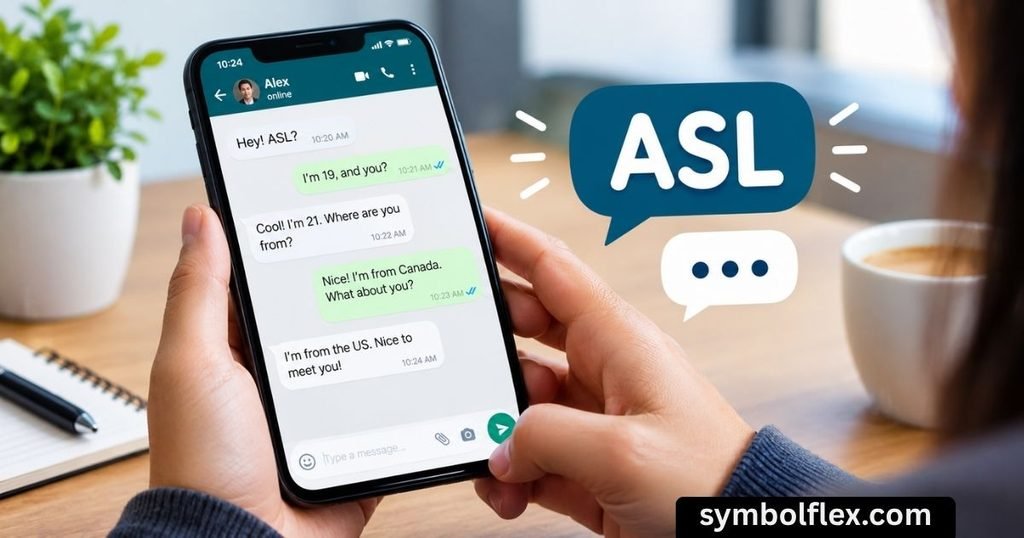
Seeing “asl” in context makes the meaning much easier to spot than any definition alone.
1. Age, Sex, Location
A stranger in an anonymous chat app types: “hey asl?” This is almost always the classic question, especially on platforms built around meeting new people.
2. As Hell (Texting and TikTok)
A friend texts: “this exam was hard asl.” A TikTok comment reads: “bro that’s crazy asl 💀.” Both use “asl” purely for emphasis, with zero connection to age or location.
3. ASL on Snapchat
Snapchat’s fast, casual tone leans heavily toward the “as hell” meaning, especially in Snap captions like “I’m bored asl rn.” Younger users rarely use the age/sex/location version here.
4. Mixed Generational Context
A parent asks a teen “what does ASL mean?” after seeing “that’s cute asl” in a text. The teen means “as hell,” but the parent assumes the older chatroom definition. This mix-up is extremely common across family group chats.
What Does ASL Mean on Different Platforms?
Platform context changes everything about how “asl” should be read. The table below breaks down the dominant meaning by app so you’re not left guessing.
| Platform | Likely Meaning | Notes |
| As hell (casual) | Common among younger family members | |
| Snapchat | As hell | Rarely used to ask personal info |
| TikTok | As hell | Almost exclusively an intensifier in comments |
| As hell or ASL (sign language) | Depends on whether the post is educational | |
| Dating Apps | Age, sex, location (older users) or as hell (younger users) | Context and punctuation matter most |
| Gaming Chats and Omegle | Age, sex, location | This is the classic use case here |
Alternative Meanings and Related Terms
Beyond the three core meanings, “ASL” occasionally shows up as shorthand in other niches, though these are far less common. In tech and coding communities, it can rarely stand for “assembly language.”
In some NLP and linguistics discussions, “ASL” variations get grouped with other initialisms like “ngl” (not gonna lie) or “fr” (for real), which serve the same emphasis function as “as hell.”
Key takeaway: if you see “asl” grouped near other slang intensifiers in a sentence, it’s almost certainly the “as hell” meaning, not a personal question.
How Should You Respond to ASL?
Your reply depends entirely on which version someone is using, so pause before typing back.
If Someone Asks “ASL?” (Age, Sex, Location)
Be cautious, especially with strangers. It’s completely fine to ignore the question, respond vaguely, or simply not share personal details with someone you don’t know. Digital safety matters more than answering quickly.
If Someone Uses “asl” as “As Hell”
Just respond normally to the emphasis, like you would to “really” or “so much.” For example, if someone says “this movie is boring asl,” you can reply “fr, I almost left.”
Common Misinterpretations of ASL
A few mix-ups happen constantly, and they’re worth knowing so you don’t misread a message.
- Assuming “asl” always means age, sex, location. Most younger users today mean “as hell,” not a personal question.
- Assuming “ASL” always means American Sign Language. This only applies in clearly educational or accessibility-focused content.
- Confusing capitalization signals. Lowercase “asl” usually signals slang emphasis, while all-caps “ASL” more often signals a direct question or the formal language name.
When Should You Avoid Using ASL?
There are a few situations where using “asl” (in any form) can cause confusion or come across poorly.
- Professional settings: Slang like “asl” doesn’t belong in work emails or formal messages.
- With people who don’t know slang: Older relatives or new acquaintances may misread it entirely.
- When clarity matters: In important conversations, skip abbreviations that could be misunderstood.
- With strangers asking age/sex/location: Never share real personal details with someone you don’t know online.
Usage Tips for ASL
A few simple habits will keep you from sending mixed signals.
- Know your audience before using any version of “asl.”
- Use lowercase when you mean “as hell” for emphasis.
- Use all caps with a question mark only when genuinely asking for personal info.
- Don’t overuse it, since repeating any slang term too often weakens its impact.
- Be safe and never give real details to strangers who ask “ASL?” online.
Frequently Asked Questions
What does ASL mean in a text message?
It usually means “as hell” when lowercase, used for emphasis, like “that’s wild asl.”
Is ASL always about age, sex, and location?
No. That meaning is mostly used by older users or in anonymous chat platforms like Omegle, not in everyday texting.
Does ASL always mean American Sign Language?
Only when the context is clearly educational, accessibility-related, or discussing Deaf culture specifically.
Is it safe to answer “ASL?” from a stranger?
No. Sharing your age, sex, or location with an unknown person online carries real safety risks, so it’s best to avoid answering.
Conclusion
The ASL meaning you’re looking for really comes down to context, capitalization, and the platform you’re on.
Lowercase “asl” almost always means “as hell” in modern texting, while capitalized “ASL” usually points to either a personal question or American Sign Language. Once you know the signals to look for, you’ll never second-guess a text again.
