
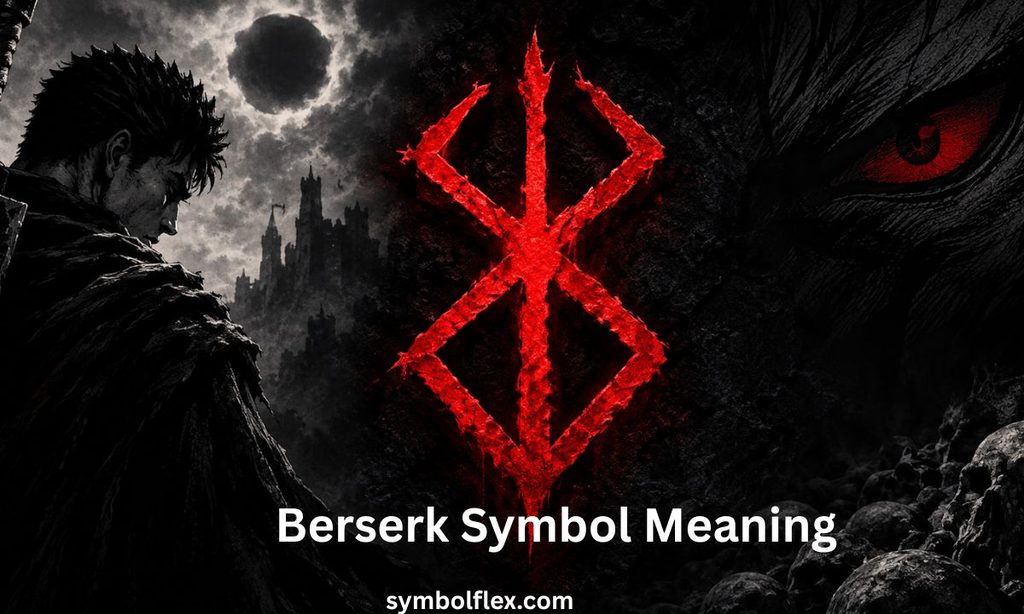
Few symbols in manga and anime carry as much emotional weight as the Brand of Sacrifice from Berserk.
Whether you first encountered it on Guts’ neck, as a tattoo on someone’s skin, or while searching for its deeper meaning you’re in the right place.
This article breaks down everything about the Berserk symbol: what it is, what it means inside the story, why it resonates so deeply with real people, and what it represents when worn as a tattoo.
What Is the Berserk Symbol?
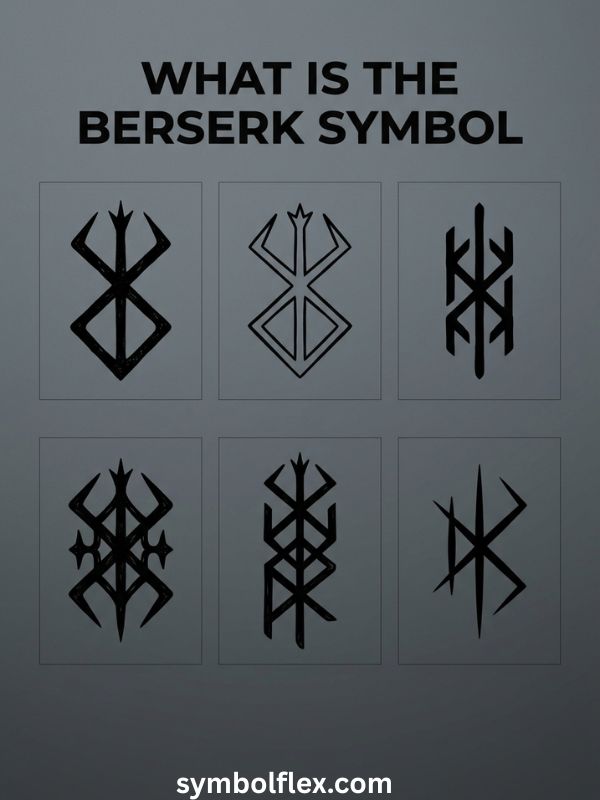
The Berserk symbol is officially known as the Brand of Sacrifice. It is a fictional mark that appears in Kentaro Miura’s dark fantasy manga series Berserk, first published in 1989.
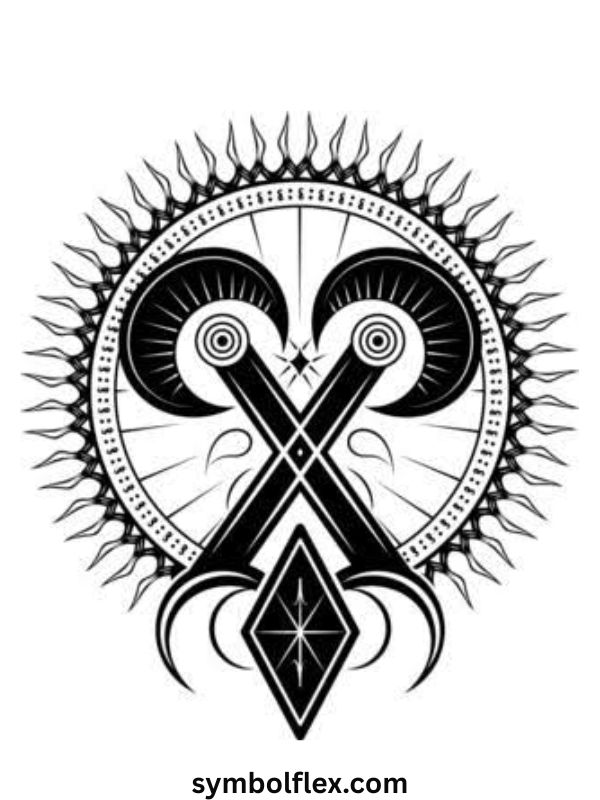
The Brand looks like a jagged, angular rune — roughly resembling a stylized letter or ancient mark — often depicted in deep red or black. It appears burned or carved into the skin of those who were offered as sacrifices during a supernatural ritual called the Eclipse.
It is not a real-world occult symbol. It was created entirely by Miura for the world of Berserk.
Quick Facts
| Detail | Information |
| Symbol Name | Brand of Sacrifice |
| Series | Berserk (manga/anime) |
| Creator | Kentaro Miura |
| First Appearance | 1989 |
| Color | Red (bleeds in presence of demons) |
| Who Bears It | Guts, Casca, members of the Band of the Hawk |
| In-Story Purpose | Marks humans sacrificed to the God Hand |
The Brand of Sacrifice: What It Means in the Story
To understand the symbol’s meaning, you need to understand the event that creates it — the Eclipse.
The Eclipse and the God Hand
In Berserk, the God Hand are five powerful supernatural beings who exist beyond normal human comprehension. When a human being is chosen to ascend and become a member of the God Hand, they must perform a sacrifice. They offer the people closest to them — their comrades, their loved ones — to demons called Apostles.
This is what Griffith does in the Eclipse arc. He sacrifices the entire Band of the Hawk, the group of soldiers he led, in exchange for being reborn as Femto, the fifth member of the God Hand.
Everyone offered as a sacrifice during the Eclipse receives the Brand of Sacrifice burned into their body.
Why Guts and Casca Are Branded
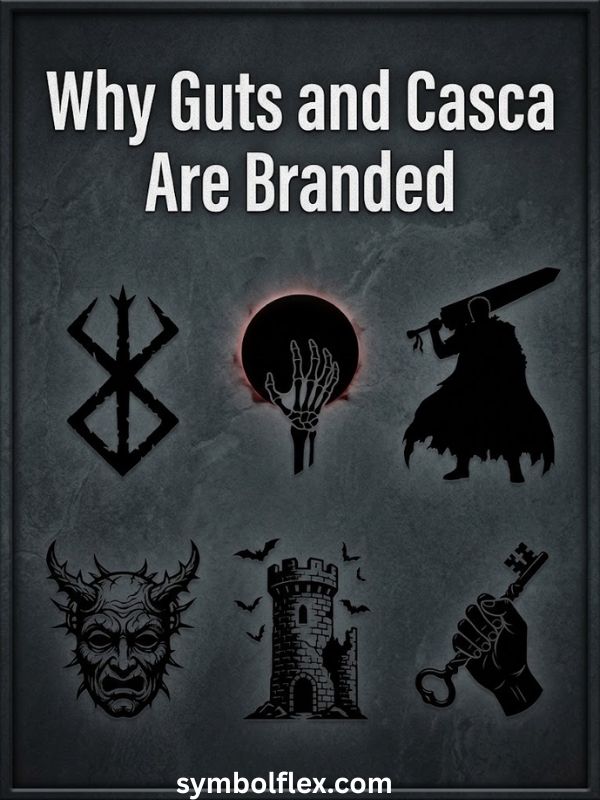
Guts and Casca are the only two members of the Band of the Hawk who survive the Eclipse though not without devastating consequences. Both are marked with the Brand. For Guts, it appears on his neck. For Casca, it appears on her chest.
The Brand serves a cruel purpose in-universe: it acts as a beacon for evil. Demons, evil spirits, and Apostles are drawn to anyone who bears it. Every night, those marked with the Brand are hunted by supernatural creatures.
What Does the Berserk Symbol Actually Represent?
This is where the symbol’s meaning becomes layered and personal.
Betrayal by Someone You Trusted
The Brand was not given by an enemy. It was given by Griffith a man Guts called his closest companion, arguably the only person Guts ever trusted before Casca. The Brand represents the wound left by someone you loved turning against you completely.
Surviving Something Unsurvivable
Guts and Casca were never supposed to live through the Eclipse. Their survival was itself a kind of defiance. The Brand, in this sense, becomes a mark of having passed through something that should have ended you — and continuing forward anyway.
The Burden of Trauma
The Brand bleeds. It hurts. It does not go away. This mirrors how trauma works in real life it does not simply disappear with time. Guts carries his grief, his rage, and his psychological wounds visibly, marked on his body. The Brand is physical evidence of emotional damage that runs deep.
Fate Versus Personal Will
One of Berserk‘s central philosophical questions is whether humans can escape their fate or whether everything is predetermined.
The Brand is the God Hand’s claim that Guts and Casca are already “theirs” that they belong to destiny’s dark machinery. Guts’ entire journey is his refusal to accept that.
Strength Born from Suffering
Because Guts keeps moving forward despite the Brand, it has come to represent a kind of earned resilience.
Not the clean, inspirational kind but the messy, painful kind that comes from losing almost everything and still choosing to get up.
25+ Meanings People Assign to the Berserk Symbol
Here is a breakdown of the meanings fans, readers, and tattoo wearers associate with the Brand of Sacrifice:
Personal Struggle and Survival
- Surviving a traumatic event or period in life
- Coming through depression or mental illness
- Overcoming addiction
- Recovering from abuse
- Living through grief or loss
- Carrying emotional scars that do not show on the surface
Resilience and Inner Strength
- Choosing to keep going when giving up feels easier
- Strength that was forged through difficulty, not given
- Refusing to be defined by what happened to you
- Finding purpose after devastating failure
- Endurance as a personal value
Betrayal and Its Aftermath
- Being betrayed by someone deeply trusted
- Surviving the fallout of broken friendship or loyalty
- Processing anger at someone who should have protected you
- Moving forward without needing closure or apology
Identity and Darkness
- Embracing the darker or more complex parts of yourself
- Rejecting the idea that suffering makes you broken
- Finding meaning in hardship rather than pretending it did not happen
- Accepting that some wounds leave permanent marks
Philosophical Meanings
- Defiance of fate or predetermined outcomes
- The idea that being “marked” does not mean you are finished
- Humanity’s ability to exist even within oppressive systems
- The choice to remain human in conditions designed to dehumanize
Fandom and Cultural Connection
- Deep love and respect for Kentaro Miura’s work
- Connection with the Berserk community and its values
- Tribute to the story’s themes of perseverance
- Honoring a character whose journey resonated personally
Berserk Symbol as a Tattoo: Meaning, Placement and Design
The Brand of Sacrifice has become one of the most recognized anime tattoos in the world. People choose it for a wide range of personal reasons, and its design is flexible enough to work across multiple styles.
Why People Get the Berserk Tattoo
Most people who get this tattoo are not simply fans of the anime or manga. Many chose it because the symbol captured something they had been through — a version of their own Eclipse. It acts as a permanent reminder that they survived, that they carry a mark from it, and that they are still here.
Some common personal reasons include:
- Surviving serious illness or surgery
- Getting through a mental health crisis
- Leaving an abusive relationship
- Processing the death of someone important
- Marking a period of personal reinvention
Common Tattoo Placements and What They Signal
Neck — The most iconic placement, mirroring Guts’ own Brand. It is a bold, visible choice that signals openness about one’s struggles. Not easy to hide, which is often intentional.
Chest — Mirrors Casca’s placement. Worn over the heart, it tends to carry more personal, emotional significance. Often chosen by people whose story connects more to themes of love, loss, or betrayal.
Forearm or Wrist — Visible but not as confrontational as the neck. Common among people who want to see it daily as a reminder. Easy to show or cover depending on context.
Shoulder or Upper Back — A middle-ground placement. Meaningful but less exposed. Often chosen by people who want the symbolism for themselves rather than for others.
Behind the Ear or Ankle — Discreet placements often chosen for minimalist versions of the symbol.
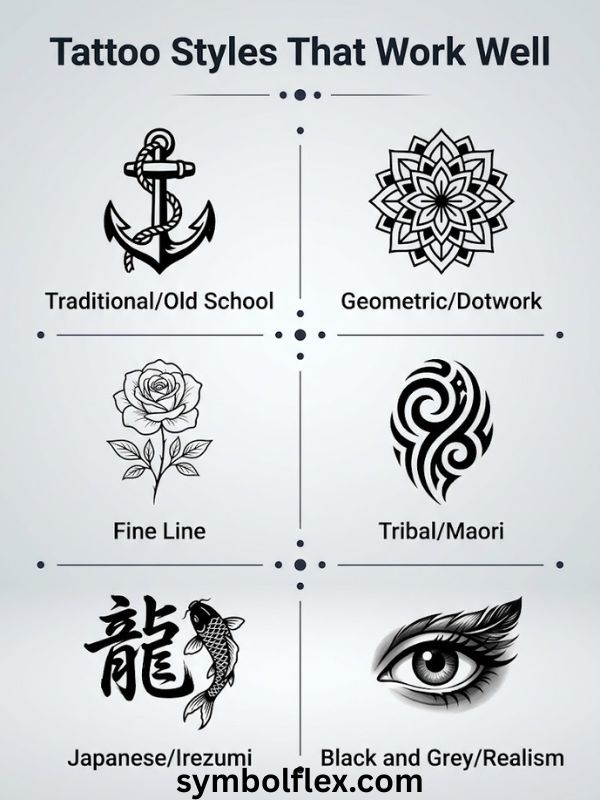
Tattoo Styles That Work Well
- Minimalist linework — Clean and simple, lets the shape speak for itself
- Red ink — Matches the in-story depiction; creates a striking look
- Blackwork — Bold and high-contrast, suits the dark themes of the series
- Fine line — Detailed and elegant, works especially well for smaller placements
- Scarification-inspired — Some people incorporate texture to mimic the branded quality of the mark
Is the Berserk Symbol Demonic or Dangerous?
This comes up often, and the answer is straightforward: no.
The Brand of Sacrifice is a fictional symbol invented by Kentaro Miura. It does not appear in any religious tradition, occult system, satanic text, or esoteric practice. It was not borrowed from any real-world belief system.
It resembles a rune or ancient marking visually, which is likely part of its design intention — Miura drew heavily on medieval European aesthetics throughout Berserk. But visual resemblance is not the same as shared meaning or origin.
Wearing the Brand as a tattoo or on clothing carries no supernatural implication. It means whatever the person wearing it decides it means — usually something deeply personal about their own story.
Common Misconceptions About the Berserk Symbol
“It’s a Satanic symbol” — It is not. No Satanic tradition uses this symbol. It was created for a manga in the late 1980s.
“Wearing it attracts evil” — This is fictional lore from the Berserk universe, not reality.
“Only edgy fans get it” — Many people who choose this tattoo have deeply considered reasons rooted in personal experience, not aesthetics alone.
The Design of the Brand of Sacrifice
The Brand is angular and asymmetrical, with a shape that feels somewhere between a rune, a brand mark, and a stylized glyph. Miura’s design communicates something ancient and imposed — it does not look chosen, it looks given.
There is no official Unicode character for it, but fans have created text approximations using combinations of symbols such as ⊕ or custom font glyphs. For tattoo purposes, most artists work directly from high-resolution manga panels or official art.
The color red is significant. In the story, the Brand bleeds when demons are near — it is never fully healed, never dry. The red ink version of the tattoo captures this living, ongoing quality of the mark.
Berserk Symbol and Mental Health
One of the most unexpected aspects of the Brand’s cultural life is how openly people connect it to mental health.
Readers and viewers have written extensively about how Berserk — and Guts specifically — helped them feel seen during periods of severe depression, PTSD, grief, and anxiety. Guts is not a comforting character. He does not heal neatly. He does not offer easy reassurance. But he keeps moving, and for many people, that is exactly what they needed to see.
Why Fans Deeply Relate to the Brand
The Brand, in this context, represents the idea that being marked by something hard does not make you broken. The mark is real. What happened was real. And you are still here.
For people who have felt that their trauma made them somehow unfit or too damaged, the Brand offers a different frame: marked, yes — but still fighting.
Guts and the Brand of Sacrifice
Guts’ relationship with the Brand defines his entire arc after the Eclipse. He does not hide it. He does not try to remove it. He wears it on his neck — one of the most exposed places on the body and he walks into danger every single night because of what it attracts.
What the Brand Truly Means for Guts as a Character
What makes Guts compelling is that he is not at peace with what happened. He carries rage, grief, and exhaustion simultaneously. The Brand is not something he has come to terms with it is something he fights through every day.
This is why so many readers find him more relatable than traditionally heroic characters. He does not have a clean arc of healing. He has persistence. He has will. And that, for many people, is enough.
Kentaro Miura and the Legacy of the Symbol
Kentaro Miura passed away in May 2021. His death was felt deeply across the global manga and anime community. Berserk was continued by his studio, Studio Gaga, working from his notes and remaining drafts.
The Brand of Sacrifice has outlived its creator as a cultural symbol. It now appears in fan art, tattoos, cosplay, gaming communities, music, and memorial tributes. Part of its staying power is that Miura embedded genuine philosophical weight into it it was never just a plot device. It was a question about suffering, humanity, and what we owe to the people who carry their damage forward.
Should You Get a Berserk Tattoo?
If the Brand of Sacrifice connects with something real in your life, it can be a meaningful choice.
Things to Think Through Before Getting It
- What does it mean to you specifically? The more personal the answer, the more you will value it long-term.
- Are you comfortable with visibility? Neck placements attract questions. Be ready to explain or comfortable saying it is personal.
- Choose an experienced artist. The angular geometry of the Brand requires clean, confident linework.
- Consider color carefully. Red ink fades differently than black ink and requires different aftercare.
There is no wrong reason to get a tattoo that means something genuine to you. The Brand is not offensive, not culturally appropriative, and not tied to any harmful ideology.
Final Thoughts
The Brand of Sacrifice is one of the most thoughtfully designed symbols in manga history. Kentaro Miura created something that functions on multiple levels simultaneously — as a plot mechanism, as a visual identity for its bearer, and as a philosophical statement about suffering and will.
That is why it has traveled so far beyond the pages of Berserk. People recognize something true in it. Not the demons, not the ritual but the experience of being marked by something you did not choose, carrying it publicly, and refusing to stop moving.
