

IDC means “I don’t care” in text, chat, and social media. It can sound calm and neutral, or blunt and dismissive, depending on the context, the relationship, and how it’s typed.
Texting slang moves fast, and short abbreviations like IDC carry a lot of weight in just three letters. This guide breaks down what IDC really means, why people use it, and how to respond without misreading the tone.
Quick Answer: What Does IDC Mean?
IDC stands for “I don’t care.” It shows up in texts, group chats, comments, and gaming lobbies as a quick way to say someone has no strong opinion, or that a topic doesn’t interest them anymore.
People use it because typing three letters is quicker than typing an opinion, though that efficiency is also why it gets misread so often.
The tone behind IDC depends entirely on the situation. It can be relaxed and easygoing, or sharp and dismissive, and readers usually need context clues to tell the difference.
Why Do People Use IDC?
People send IDC for more reasons than pure indifference. The intent behind it usually falls into one of these categories:
| Reason | What It Usually Means |
| No preference | They’re fine with any option |
| Not interested | The topic doesn’t hold their attention |
| Annoyed | They’re frustrated but don’t want to escalate |
| Wanting to end the conversation | They’re signaling it’s time to wrap up |
| Appearing unbothered | They care but don’t want to show it |
Reading the reason correctly usually depends on what came right before the message. A question about dinner plans reads very differently than IDC dropped in the middle of a heated exchange.
Is IDC Rude?
IDC isn’t automatically rude. It depends on tone, timing, and the relationship between the people texting.
Friendly or harmless use
When a friend asks where to eat and you reply “idc, you pick,” it reads as relaxed and easygoing. There’s no tension attached, just genuine flexibility.
Slightly blunt use
If someone asks for your opinion and gets a flat “idc” with no follow-up, it can feel a little cold. It’s not hostile, but it can come across as low-effort.
Clearly dismissive use
IDC sent in all caps, with extra punctuation, or right after a serious question usually signals real frustration. In that context, it’s meant to shut the conversation down.
Does IDC Mean Someone Truly Doesn’t Care?
Not always. IDC is often a defense mechanism, not a literal statement of feeling. Someone might type “idc” about weekend plans while actually caring quite a bit, but they don’t want to seem demanding, so context and tone reveal more than the letters themselves.
IDC Meaning in Different Contexts
In casual texting, IDC usually means low-stakes flexibility, like choosing a restaurant or movie, with no hidden tension. In an argument, it often signals frustration or a desire to disengage rather than escalate, shutting down conflict instead of continuing it.
Between friends, it’s typically harmless and reflects genuine ease about small decisions. In a relationship, though, IDC can sting if it follows an emotional question, since it may read as dismissive of the other person’s feelings.
IDC on Social Media
IDC shows up across nearly every platform, but the tone can shift slightly based on the app’s culture and pace.
| Platform | Typical Tone |
| Casual, often used in comments or captions | |
| Snapchat | Quick, low-effort reply in fast chats |
| TikTok | Comment-style, often joking or sarcastic |
| Similar to regular texting, tone depends on context | |
| Discord | Common in gaming chats, usually neutral |
| Slightly more formal, still casual overall | |
| Gaming | Fast-paced, often about strategy or team decisions |
| Dating apps | Can signal low interest or genuine flexibility |
On dating apps specifically, IDC deserves extra caution, since a match asking about plans may read “idc” as low enthusiasm, even if that wasn’t the intent.
IDC Meaning in Professional Messages
IDC has no place in professional or formal communication. It reads as careless and unprofessional, even if the sender means it casually.
In work emails or team chats, phrases like “I’m flexible” or “either option works” communicate the same idea without sounding dismissive.
IDC vs I Don’t Mind
These phrases sound similar but land differently. “IDC” can feel neutral or slightly cold, while “I don’t mind” sounds warmer and more considerate. “I don’t mind” signals active flexibility, like the person is genuinely open to either choice, while IDC often reads as more detached.
IDC vs IDK
IDC means “I don’t care,” while IDK means “I don’t know.” They get confused because both are short and common in quick replies, but IDK reflects uncertainty about facts, while IDC reflects a lack of preference or interest.
IDC vs Whatever
IDC
IDC tends to sound more neutral and can be read as genuinely relaxed, depending on context.
Whatever
“Whatever” almost always carries a sharper, more dismissive edge. It’s harder to read as friendly, especially in an argument or after a serious question.
IDC vs IDGAF
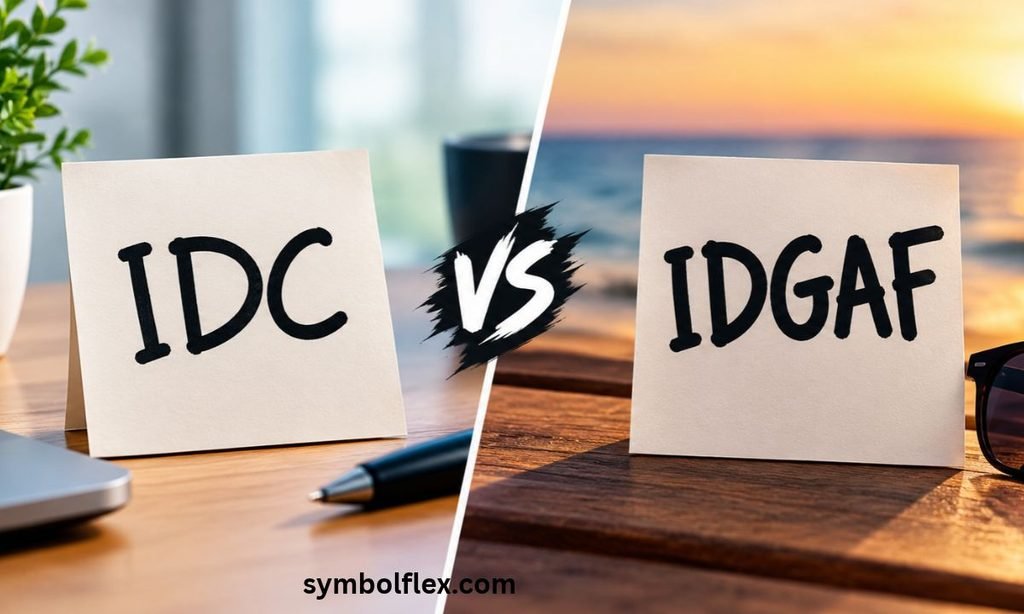
IDGAF (“I don’t give a f*”) is a much stronger, more aggressive version of IDC.** While IDC can be casual, IDGAF is almost always meant to sound bold, defiant, or unbothered on purpose.
IDC fits everyday chat. IDGAF fits moments where someone wants to make a clear, forceful statement about not caring.
IDC vs I Couldn’t Care Less
“I couldn’t care less” is a stronger, more deliberate statement than IDC. It implies zero remaining interest, while IDC can still leave room for mild flexibility or ambiguity.
Common Examples of IDC in Text
- No preference: “Pizza or tacos tonight?” “idc, both sound good.”
- Choosing a movie: “What do you want to watch?” “idc, you pick something.”
- Showing disinterest: “Did you see what she posted?” “idc honestly.”
- Ending an argument: “Can we talk about this later?” “idc, do whatever you want.”
- A defensive response: “You seem upset.” “idc, I’m fine.”
How to Reply When Someone Says IDC
If they mean “I don’t mind,” just move forward and make the decision yourself without overthinking it. If they sound annoyed, give them space instead of pushing for more of a reaction.
If they sound hurt, a gentle follow-up question can help clarify what’s really going on underneath the short reply. If you think they’re being rude, it’s fair to say so calmly, and if you want to keep things playful, mirroring their casual tone usually keeps the exchange light.
How to Use IDC Without Sounding Rude
Pairing IDC with a little extra context softens it considerably. “Idc, but maybe the Italian place?” sounds far warmer than a flat “idc” alone, and adding a light emoji helps signal you’re relaxed, not disinterested. Tone almost always comes from what surrounds the letters, not the letters themselves.
When Should You Avoid Using IDC?

Skip IDC in professional messages, serious emotional conversations, or moments when someone genuinely needs your input. It’s also worth avoiding right after asking someone how they feel, since it can undercut the question entirely.
Is IDC Flirty?
IDC can occasionally read as flirty when it’s paired with playful energy, like teasing banter on a dating app. On its own, though, it usually reads as neutral rather than romantic.
Is IDC Offensive?
IDC generally isn’t offensive, but repeated or curt use in emotional conversations can come across as careless. It’s more about pattern and timing than the phrase itself being harmful.
Common Mistakes People Make With IDC
- Assuming it always means anger: Most of the time, it’s simply neutral or relaxed.
- Assuming the person truly feels nothing: IDC often masks real feelings someone doesn’t want to show.
- Using it in formal communication: It instantly lowers the professionalism of a message.
- Ignoring the topic: Context changes the meaning more than the phrase itself.
- Treating every short reply as rude: Brevity doesn’t always equal disrespect.
What Does IDC Mean With a Period?
Punctuation changes the tone more than people realize. Plain “IDC” reads as neutral and casual, while “IDC.”
adds a flat, final feel that seems more closed off. “IDC!!!” usually signals frustration, and “idc lol” softens the phrase into something lighthearted.
What Does “IDCC,” “IDC Fr,” and “IDC Tbh” Mean?
IDCC is simply an extended, emphasized version of IDC, typed quickly for effect. “IDC fr” means “I don’t care, for real,” emphasizing sincerity to reassure someone the indifference is genuine.
“IDC tbh” means “I don’t care, to be honest,” which softens the phrase slightly while still communicating honest indifference.
Related Texting Abbreviations
Common companions to IDC include IDK (I don’t know), NVM (never mind), TBH (to be honest), IMO (in my opinion), and FR (for real), all of which shape tone in similar quick-reply situations.
Frequently Asked Questions
What does IDC mean in texting?
IDC means “I don’t care” and is used to show a lack of preference or interest in a topic.
Is IDC rude in a text?
It depends on context. IDC alone can sound blunt, but paired with extra words it usually reads as casual and harmless.
What is the difference between IDC and IDK?
IDC means “I don’t care,” while IDK means “I don’t know.” One reflects indifference, the other reflects uncertainty.
Does IDC mean someone is angry?
Not necessarily. It can reflect calm indifference, mild frustration, or a defense mechanism, depending on the situation.
What does IDC mean from a girl or guy?
The meaning doesn’t change by gender. Tone depends on relationship and context.
Final Answer
IDC means “I don’t care,” but its tone shifts based on punctuation, context, and the relationship behind the message. Reading the situation, not just the letters, is the real key to understanding what someone actually means.
