


Introvert meaning, in simple terms, describes a personality style where a person gains energy from quiet time alone instead of from being around people. It does not mean someone is shy, cold, or antisocial.
It just means their social battery drains faster in crowds and recharges in solitude.This word shows up everywhere now, from dating bios to group chats to casual texts.
But the introvert meaning shifts depending on who says it and where. Understanding that context is the difference between replying well and replying awkwardly.
What Is an Introvert?
An introvert is someone whose energy comes from within rather than from external social stimulation. They tend to think before speaking, prefer smaller groups over big crowds, and need alone time to feel balanced.
This is a personality trait, not a flaw or a diagnosis. Psychologists trace the concept back to temperament research, where people fall somewhere on a spectrum between introversion and extroversion.
Common traits include:
- Preferring one-on-one talks over large group settings
- Needing quiet time to “recharge” after socializing
- Thinking carefully before responding in conversations
- Enjoying solo hobbies like reading, gaming, or writing
- Feeling drained (not energized) by long social events
Being an introvert doesn’t mean someone can’t be outgoing. Many introverts are confident, funny, and social in short bursts, they just need a recovery period afterward.
Introvert vs. Shy: Are They the Same?
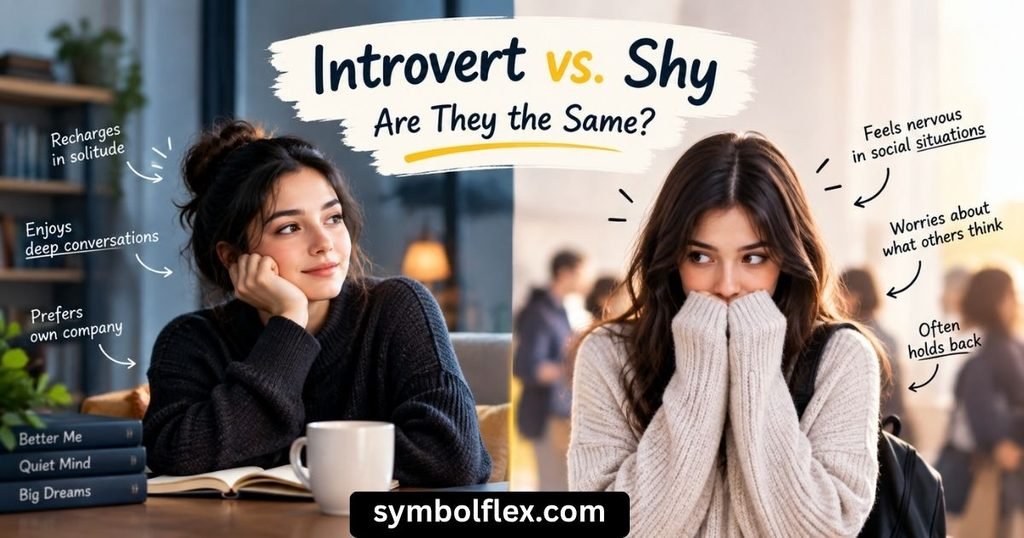
No, and this mix-up causes a lot of confusion in daily conversations. Shyness is about fear or anxiety in social situations, while introversion is about where someone gets their energy from.
A shy person might want to socialize but feels nervous doing it. An introvert might feel totally comfortable socially, they simply prefer less of it.
| Trait | Introvert | Shy Person |
| Root cause | Energy preference | Social anxiety or fear |
| Wants to socialize? | Sometimes, in moderation | Often yes, but feels blocked |
| Feels drained by crowds? | Yes | Not always |
| Comfortable one-on-one? | Usually very comfortable | Can still feel nervous |
| Can be outgoing? | Yes, in short bursts | Less common |
Someone can be shy and extroverted, or confident and introverted. The two words describe different things entirely, even though people often use them interchangeably.
How Context Changes the Introvert Meaning
The word “introvert” doesn’t always mean the exact same thing. Context, tone, and platform all shape how it should be read.
Talking About Social Energy
Here, “introvert” is literal. Someone is describing how they recover energy, usually after a busy day or event.
Explaining a Preference
Sometimes it’s shorthand for “I’d rather not.” For example, declining a party invite with “I’m an introvert” is really just a polite way of setting a boundary.
Using Humor
Many people use “introvert” jokingly, like calling canceling plans “introvert Olympics.” This tone is playful, not literal, and doesn’t need a deep response.
Describing Someone Else
When used about a third party (“she’s such an introvert”), it’s usually an observation about behavior, not a judgment. Context and tone matter here more than the word itself.
Introvert Meaning in Chat and Social Media

Online, “introvert” often appears in bios, captions, and casual texting slang. It’s frequently paired with humor, like “professional introvert” or “introvert energy only.”
In digital culture, calling yourself an introvert can also double as a soft boundary-setting tool. It signals “I need space” without sounding harsh, which is common in both friend groups and dating app messaging.
Real Conversation Examples
Seeing the word in action makes the meaning click faster than any definition.
1. Friends
Friend: “Sorry I didn’t come out last night, introvert mode activated.” You: “No worries, rest Classmates
Classmate: “I hate group projects, I’m too introverted for this.” You: “Same here honestly, let’s just split the work and keep it simple.”
3. Dating
Match: “Fair warning, I’m a huge introvert.” You: “Good to know! I like chill dates anyway, coffee over clubbing any day.”
These examples show how tone should match the moment, not overanalyze the label.
Is Introvert Rude?
No, calling yourself an introvert isn’t rude. It’s simply a way of describing a personality preference, similar to saying you’re a morning person or a night owl.
It only becomes awkward if it’s used to dismiss someone else’s feelings, like ignoring texts for days and blaming “introvert nature.” The word itself carries no negative charge.
Is Introvert Offensive?
Generally, no. “Introvert” is a neutral, widely accepted term, not a slur or insult.
It can feel presumptuous, though, if you label someone else as an introvert without knowing them well. It’s best used as self-description or in a lighthearted, non-judgmental way about others.
How to Reply When Someone Says They’re an Introvert
The right reply depends on tone. Here are options for different situations.
Friendly Replies
- “That makes sense, I get it.”
- “No judgment here, take your time.”
- “I appreciate you sharing that.”
Funny Replies
- “Certified introvert club, welcome aboard.”
- “Same, my energy bar is always on low battery.”
- “Respect, canceling plans is a personality trait now.”
Polite Replies When You’re Unsure
- “Got it, thanks for letting me know.”
- “That’s totally fine, whatever works for you.”
- “Appreciate the heads up!”
When to Use the Word Introvert
Use it when someone has self-identified that way, or when describing your own preferences in a casual, low-stakes conversation. It works well for explaining why you skipped an event or prefer quiet plans.
When to Avoid Calling Someone an Introvert
Avoid labeling someone else, especially early in a friendship or dating relationship, unless they’ve said it first. It can come across as presumptuous or like you’re boxing them into a category they didn’t choose.
Common Mistakes About Introverts
- Assuming all introverts are shy or antisocial
- Believing introverts can’t be great public speakers or leaders
- Thinking introverts dislike people entirely
- Confusing quietness with unfriendliness
- Assuming introversion never changes in different settings
Similar Terms to Introvert
- Ambivert: Someone with a mix of introverted and extroverted traits
- Highly sensitive person (HSP): Related but focused on sensory and emotional sensitivity
- Homebody: Prefers staying in, though not always tied to energy or personality theory
- Reserved: Descriptive of behavior, without the deeper personality framework
Origin and Popularity of the Term
The term introvert gained popularity through early 20th-century psychology, most notably from Carl Jung’s work on personality types. It later became mainstream through personality frameworks like the Myers-Briggs Type Indicator (MBTI).
In recent years, social media and self-awareness trends have pushed the word into everyday slang, far beyond its clinical roots.
Quick Recap
- Introvert meaning: someone who recharges through alone time, not through socializing
- Different from shyness, which is rooted in social anxiety
- Context changes tone, from literal to joking to boundary-setting
- Best used as self-description, not as a label for others
- Common in dating, texting, and casual chat as a way to explain preferences
Final Thoughts
The introvert meaning goes far beyond a textbook definition. It’s a flexible term used to explain energy levels, set boundaries, and add humor to everyday conversations.
Whether you’re texting a friend, chatting with a match, or just curious about the label, understanding tone and context makes all the difference.Use it thoughtfully, and it becomes a simple, respectful way to talk about how people connect.
