

Everyone’s typing “x” at the end of texts these days, but barely anyone agrees on what it actually means. The real x meaning in text is simple: it’s a symbol for a kiss, used to add warmth, affection, or a soft, friendly tone to a message.
Sent by a close friend, it usually means nothing more than a casual habit. Sent by someone new, it can feel like a flirty signal you’re not sure how to read. This guide breaks down exactly when “x” is affection, when it’s just habit, and when it might mean something more.
What Does X Mean in Text?
In texting, x represents a kiss. People tack it onto the end of a message to soften the tone or show a little affection, the same way you might add a smiley or a “take care.”
It didn’t start with smartphones. Handwritten letters used “x” as a sign-off long before texting existed, and the habit just carried over.
The number of x’s people use tends to signal intensity, though this isn’t a fixed rule:
| Symbol | Common Feeling |
| x | Friendly or casual |
| xx | Warmer, closer relationship |
| xxx | Strong affection or love |
| xoxo | Kiss and hug, often American-style |
A single “goodnight x” from a close friend usually means nothing more than “sleep well, I care about you.” From someone you just met, it can read very differently.
Where Did the X Kiss Come From?

The symbol has old roots. One popular theory traces it to medieval times, when people who couldn’t write signed documents with an X and then kissed the mark to show they meant it sincerely.
By the 19th and 20th centuries, the “x” had become a standard sign-off in personal letters. When texting arrived, it simply moved into a new format. Nothing about the meaning changed, only the medium.
Does X Mean Something Different in the US and UK?
Yes, and this is where a lot of confusion comes from. British texters use “x” constantly, sometimes even in casual work messages between colleagues who know each other well. It’s closer to background noise than a romantic gesture.
Americans tend to use it more sparingly, often reserving it for close friends, family, or partners. An American getting an “x” from a British coworker might read too much into it, and a Brit might not think twice about sending one.
A simple rule if you’re unsure: mirror what the other person does. If they’ve been adding “x” to every message for weeks, it’s likely just their habit. If it’s brand new, that’s more worth paying attention to.
What Does X Mean on Instagram, Snapchat, and WhatsApp?
The platform can shift the meaning slightly:
- WhatsApp and iMessage: Closest to traditional texting. An “x” here usually follows the same rules as a regular text message.
- Instagram DMs: Common in casual chats, comments, and captions. It often just adds friendliness rather than romantic weight.
- Snapchat: Less common, since messages disappear quickly and the app leans more visual than written. When it does appear, it tends to carry more personal weight, since it wasn’t a required part of the format.
- Slack or work email: Rare, and generally best avoided unless you have an established, informal relationship with that coworker.
Is Sending X Flirting or Just a Habit?
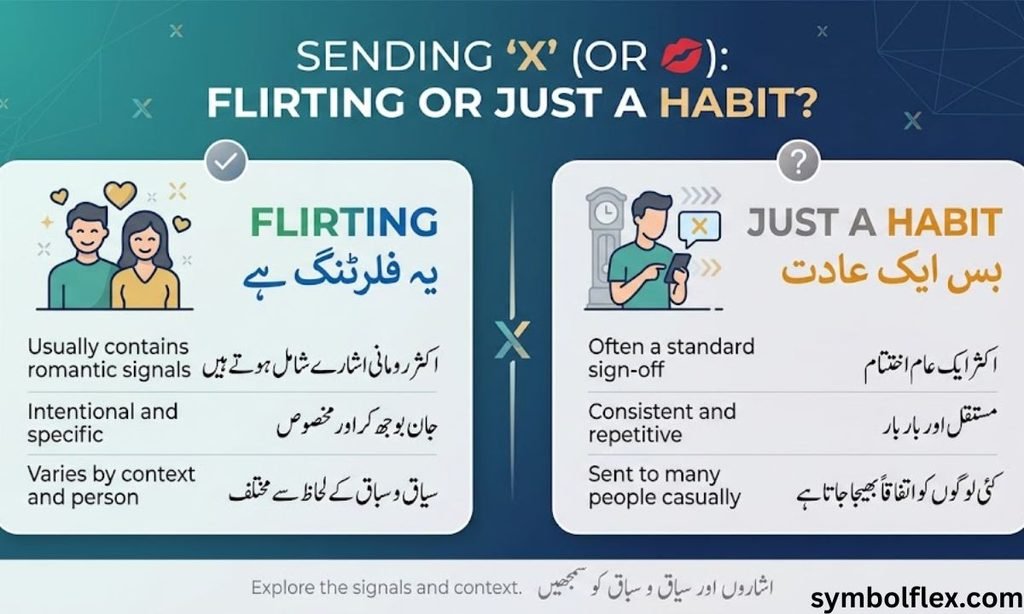
This is the question most people actually want answered, and it’s also the one most guides gloss over.
How can you tell if someone’s x is flirty or a habit?
Look at their pattern, not just the single message. A few things to check:
- Do they send x to everyone, or just to you? If it shows up in group chats or messages to their mom, it’s probably habit.
- Is this new? A sudden switch from no x’s to regular x’s can signal a shift in how they see the relationship.
- What’s the rest of the message like? An x paired with longer, more personal messages carries more weight than one tacked onto a quick “ok x.”
Linguists sometimes describe this as reading someone’s baseline. Once you know their normal texting style, the meaningful signal is the deviation from it, not the symbol itself.
What should you text back if someone sends x?
There’s no single correct response, but here’s a practical way to decide:
- If you’re comfortable and it feels natural: Mirror it back with the same number of x’s. This is the easiest, lowest-pressure option.
- If you’re unsure how you feel: Respond normally and skip the x. Leaving it out isn’t rude, and it won’t necessarily be read as a rejection.
- If it feels uncomfortable or unwanted: You can simply not include one in your reply. You don’t owe an explanation for how you sign off on your own texts.
When Should You Use X in a Text?
When It’s Fine to Use X
- With close friends or family who already use it casually
- With a partner or someone you’re romantically interested in
- When the relationship is established enough that a little warmth won’t be misread
When You Should Skip It
- With new contacts or people you barely know
- In professional emails or work chats, unless the culture at your job clearly supports it
- When you’re not sure how the other person will interpret it, and getting it wrong could cause awkwardness
Other Meanings of X in Text
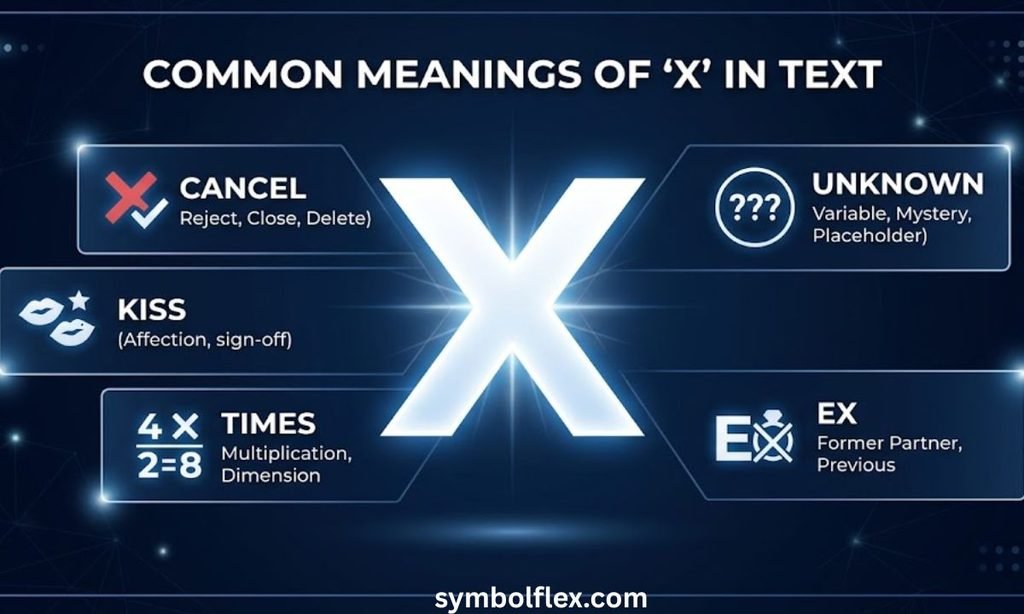
Outside of affection, “x” shows up in a few unrelated ways:
- As a placeholder: Standing in for a name, date, or unknown value, similar to how it’s used in math.
- As a correction mark: Marking something as wrong or crossed out, especially in forms or grading.
- As a close or cancel icon: The little X button used to dismiss a pop-up or close a window has nothing to do with affection at all.
Context makes the difference obvious almost every time. Nobody confuses a red X icon on their screen with a kiss.
Frequently Asked Questions
What does x mean at the end of a text?
It usually represents a kiss, added to give the message a warmer or more affectionate tone.
Is sending “x” in text flirting?
It can be, but it’s often just a habitual sign-off. The context and the sender’s usual texting style matter more than the symbol itself.
What does “xx” mean in texting?
Generally a step up from a single x, suggesting a slightly warmer or closer relationship, though it still depends heavily on who’s sending it.
Is “x” commonly used worldwide?
It’s especially common in the UK, where it appears in everyday casual messages. It’s used less often, and usually more selectively, in the US and other countries.
Can “x” be misunderstood in text?
Yes. Since it can mean anything from a genuine habit to a flirty signal, mismatched expectations between texting cultures or personal styles can easily cause confusion.
The Bottom Line
The x meaning in text comes down to one small symbol carrying a lot of context. On its own, it usually just means a kiss or a friendly sign-off. Paired with who sent it, how often they use it, and what platform they used, it can tell you a lot more.
When in doubt, pay attention to the pattern rather than the single message. That’s almost always where the real answer is.
