

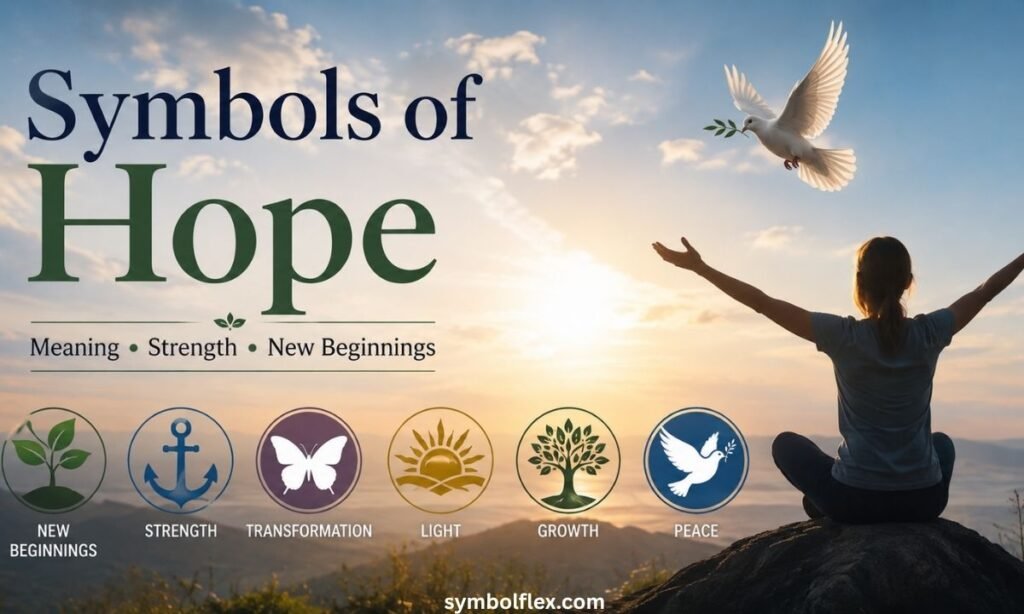
Hope never disappears completely,it just needs a symbol to hold onto. A dove means peace after struggle.
A sunrise means a fresh start. A lit candle means light winning over darkness. These small signs carry big emotional weight, and this guide breaks down exactly what they mean.
What Are Symbols of Hope?
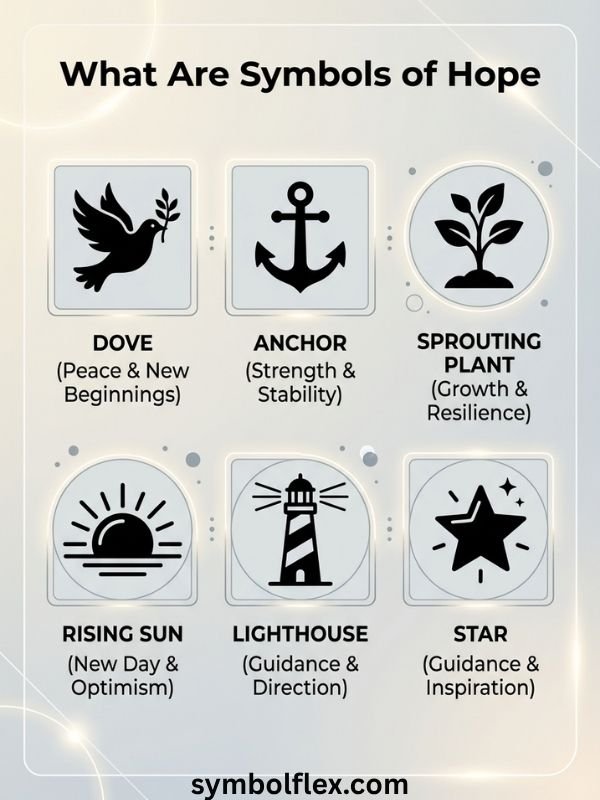
A symbol of hope is any image, object, or sign that represents optimism, renewal, faith, or the belief that circumstances can improve. Unlike a simple decoration, these symbols carry emotional weight because they’re tied to real human experiences — survival, healing, new beginnings, and resilience.
Symbols of hope generally fall into a few categories:
- Nature-based symbols — sunrise, rainbow, lotus, sunflower
- Animal symbols — dove, butterfly, phoenix
- Object-based symbols — anchor, candle, key
- Cultural or religious symbols — olive branch, cross, om symbol
What makes a symbol “of hope” isn’t just tradition — it’s the emotional story attached to it. A candle isn’t hopeful because it produces light; it’s hopeful because light appearing in darkness mirrors what we want to feel when we’re struggling.
The Deeper Meaning Behind Hope Symbols
Hope symbols work on more than one level. To understand why they resonate so strongly, it helps to look at their meaning from three angles.
Spiritual Meaning
In most spiritual traditions, hope is tied to the idea of something greater guiding us through uncertainty. A dove, for instance, is associated with divine peace and reassurance in several belief systems.
Light-based symbols sunrises, candles, stars often represent divine presence breaking through darkness or confusion. Spiritually, these symbols aren’t just decorative; they’re treated as reminders that you are not walking through hardship alone.
Psychological Meaning
From a psychological standpoint, hope symbols function as anchors for the mind. When someone is anxious, grieving, or overwhelmed, a visual symbol can interrupt spiraling thoughts and offer a moment of calm.
This is part of why people wear hope-themed jewelry, keep motivational images nearby, or get symbolic tattoos after recovering from illness, loss, or addiction. The symbol becomes a mental checkpoint a physical cue that says, “you’ve gotten through hard things before.”
Cultural Meaning
Culturally, hope symbols often emerge from collective survival a community’s shared history of hardship and recovery.
A symbol that starts as personal (a single family’s story) can eventually become a widely recognized cultural marker of resilience, passed down through art, religion, and storytelling.
Powerful Symbols of Hope and What They Represent
Below are some of the most recognized symbols of hope, along with the meaning behind each one.
1. The Dove
The dove is one of the most universally recognized symbols of hope and peace. Its association with hope largely comes from the story of a dove returning with an olive branch after a flood, signaling that danger had passed. Today, it represents peace, reconciliation, and safety after difficulty.
2. The Rising Sun
Sunrise imagery represents new beginnings. No matter how difficult the previous day was, the sun rising again is proof that time moves forward and change is constant. This is why “sunrise” is a common motif in recovery communities and grief support groups — it signals that another chance is always coming.
3. The Anchor
The anchor symbolizes stability during emotional or literal storms. Historically used by sailors as a symbol of safety and return, it has evolved into a broader symbol of steadiness — the idea that hope keeps you grounded even when everything feels uncertain.
4. The Butterfly
The butterfly represents transformation. Its life cycle — from a caterpillar into something entirely different — mirrors personal growth after hardship. Many people choose butterfly symbolism after major life changes: recovery, loss, healing, or starting over.
5. The Candle
A candle represents hope in its simplest form: light overcoming darkness. Because a candle can be lit anywhere, at any time, it has become common in memorial services, prayer vigils, and personal rituals meant to represent comfort during grief or uncertainty.
6. The Rainbow
Rainbows appear after storms, which makes them a natural symbol of hope following hardship. Across cultures, they’re associated with promises, renewal, and the idea that difficult periods are temporary.
7. The Lotus Flower
The lotus grows out of muddy water yet blooms clean and untouched. In several Eastern traditions, it represents spiritual awakening and rising above struggle — especially meaningful to people going through emotional or spiritual healing.
8. The Phoenix
Rooted in mythology, the phoenix symbolizes rebirth — rising from destruction stronger than before. It’s commonly chosen by people who’ve overcome significant setbacks, illness, or major life transitions.
9. The Olive Branch
Beyond its pairing with the dove, the olive branch independently symbolizes peace and the end of conflict. It represents hope for reconciliation — between people, communities, or nations.
10. The Sunflower
Sunflowers naturally turn to follow sunlight, which has made them a symbol of positivity, resilience, and choosing to focus on light even during hard seasons. They’re often gifted to people going through recovery.
Symbols of Hope Across Cultures
Hope symbolism isn’t limited to one region or belief system — it appears throughout history in strikingly similar forms, even when cultures developed independently of one another.
| Culture | Common Hope Symbol | Core Meaning |
| Ancient Egypt | Scarab beetle | Renewal, rebirth, transformation |
| Ancient Greece | Pandora’s box (hope remaining) | Hope as the final comfort after hardship |
| Christianity | Dove, cross, olive branch | Peace, faith, salvation |
| Native American traditions | Feathers, dreamcatchers | Protection, guidance, positive energy |
| Buddhism/Hinduism | Lotus flower | Spiritual awakening, rising above suffering |
| Chinese culture | Red color, cranes | Good fortune, longevity, renewal |
While the imagery differs, the underlying message stays consistent across nearly every culture: hope is something that survives even the worst circumstances, and it’s worth holding onto.
Symbols of Hope in Art, Film, and Everyday Life
Hope symbolism shows up constantly in creative work because storytellers rely on it to signal emotional turning points. A single ray of light breaking through clouds, a character planting something new, or a bird appearing after loss these visual cues are shorthand for “things are about to change.”
In everyday life, people use hope symbols in similarly intentional ways:
- Jewelry and tattoos — anchors, butterflies, and small suns are popular because they’re personal, private reminders you can carry daily.
- Home decor — candles, sunrise art, and rainbow motifs are common in spaces meant to feel calming or restorative.
- Memorial and recovery spaces — doves, sunflowers, and lotus imagery frequently appear in grief support materials and sobriety milestones.
- Gifts during hard times — items featuring hope symbols are commonly given to someone going through illness, loss, or a major transition, because they offer comfort without needing extra words.
What It Means When Hope Symbols Appear in Dreams
Dream interpretation isn’t an exact science, but certain hope-related images tend to carry similar emotional associations when they appear in dreams:
- Light or sunrise — often reflects a subconscious feeling that a difficult period is ending
- Doves or birds in flight — can reflect a desire for peace or freedom from stress
- Water clearing or calming — frequently associated with emotional relief after turmoil
- Flowers blooming — often tied to personal growth or a sense of readiness for change
These interpretations aren’t guarantees of meaning — they’re patterns many people relate to, especially during periods of stress or transition.
Can Symbols of Hope Have a Negative Side?
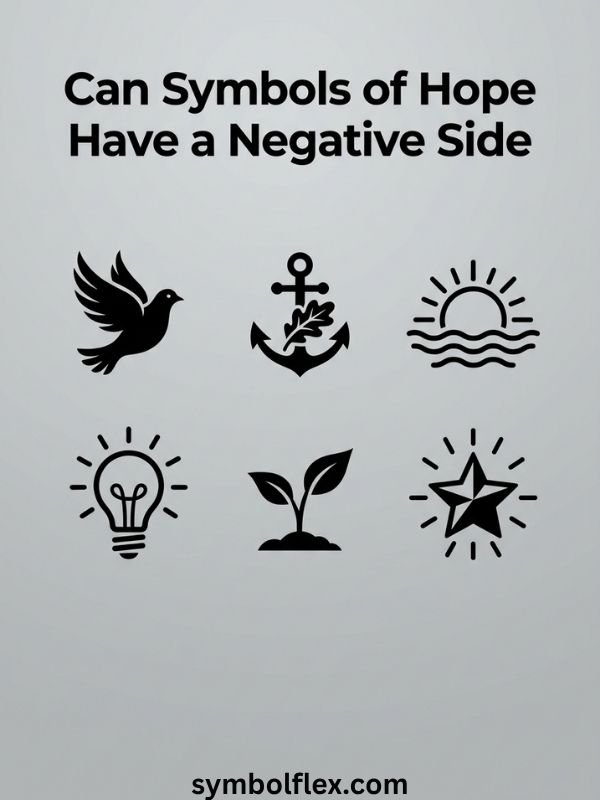
Symbols themselves aren’t inherently positive or negative — context shapes their meaning. For example:
- A candle can represent comfort, but an extinguished candle is sometimes used to symbolize loss.
- A wilted sunflower can represent fading hope rather than renewal.
- A broken anchor may symbolize instability instead of security.
Understanding this dual nature is useful, especially in art, writing, or personal reflection, because it shows that hope symbolism adapts to where a person is emotionally, not just what the object traditionally “means.”
Why Humans Are Naturally Drawn to Symbols of Hope
People gravitate toward hope symbols because they simplify complex emotions into something visual and manageable.
Hardship is often confusing and hard to put into words — but a symbol offers an immediate emotional shortcut. It doesn’t require explanation, and it doesn’t demand that someone “feel better” instantly. It simply offers a quiet reminder that change and healing are possible.
This is also why hope symbols tend to be shared during collective struggles — disasters, wars, or community loss. When many people are hurting at once, a shared symbol becomes a way to grieve, cope, and encourage each other without needing a shared language.
Frequently Asked Questions
What is the most universal symbol of hope?
The dove is widely considered the most universally recognized symbol of hope, largely because its meaning peace and safety after hardship translates across many cultures and belief systems.
What flower symbolizes hope?
The lotus and the sunflower are the two flowers most associated with hope. The lotus represents spiritual growth despite difficult conditions, while the sunflower represents resilience and choosing positivity.
What color represents hope?
Yellow and light green are most often associated with hope, largely because they’re linked to sunlight, growth, and renewal. In some cultures, white also represents purity and peace.
Is the phoenix a real symbol of hope?
Yes while the phoenix is mythological, it’s a well-established cultural symbol representing rebirth and rising stronger after destruction or hardship.
Final Thoughts
Symbols of hope endure because they capture something universal: the belief that darkness, struggle, and uncertainty are temporary.
Whether it’s a dove, a sunrise, a lotus flower, or a simple lit candle, these symbols give people a way to hold onto optimism even when words fall short.
Choosing one whether for a tattoo, a keepsake, or a quiet personal reminder isn’t just decorative. It’s a way of telling yourself, and others, that better days are still ahead.
